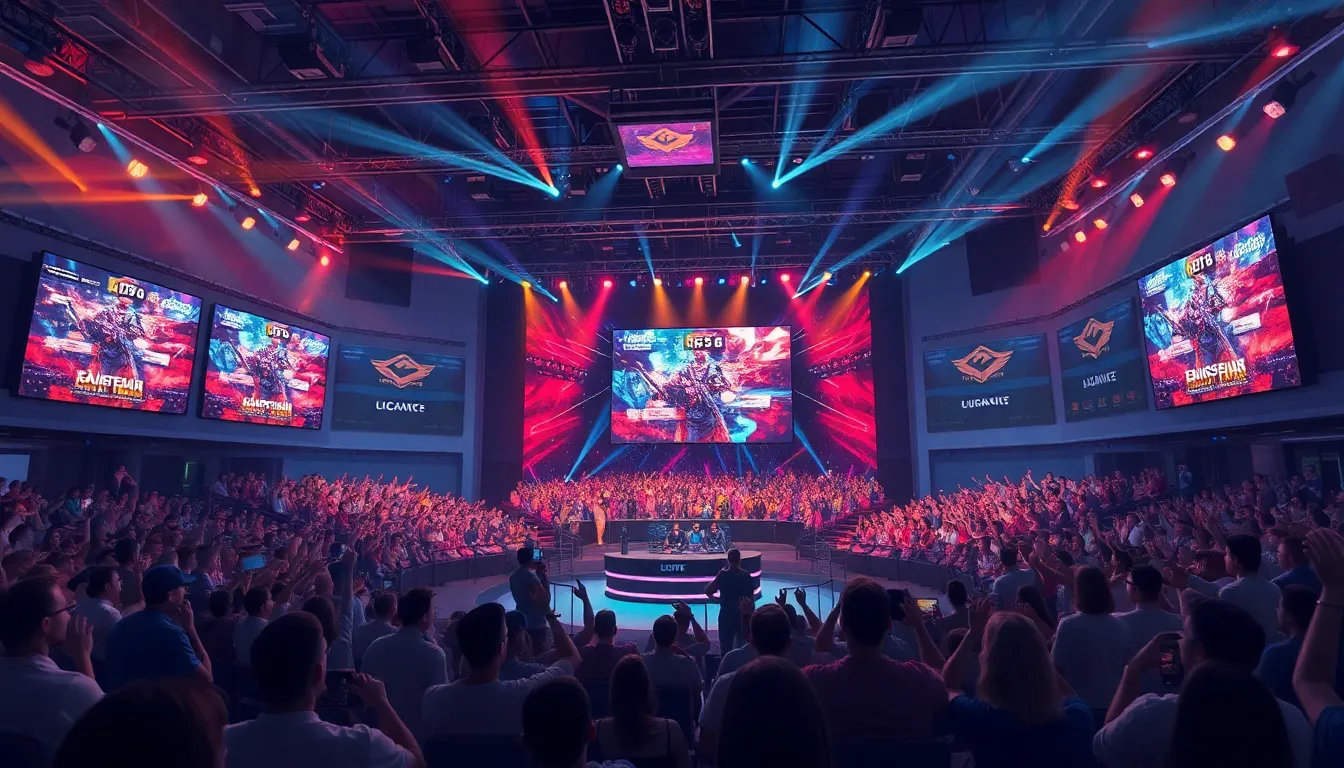
In the world of esports, the stage is more than just a platform; it’s a battleground where legends are born and dreams are shattered. Picture this: bright lights, roaring fans, and the unmistakable sound of keyboards clacking like a symphony of digital warfare. The esports stage captivates audiences, turning casual gamers into die-hard fans faster than you can say “game on.”
Esports Stage
The esports stage serves as the heart of competitive gaming. It provides a unique environment where players and fans come together, creating an electrifying atmosphere.
Definition And Importance
An esports stage refers to a physical or virtual platform designated for competitive gaming events. These stages feature state-of-the-art technology, including high-definition screens, advanced sound systems, and comprehensive lighting to enhance the viewing experience. Importance lies in the ability to bring together players and spectators, fostering community and engagement. Additionally, esports stages contribute to the professionalization of the gaming industry. They elevate gaming from casual play to a recognized sport, allowing for sponsorship and media coverage that boosts the industry’s growth.
Key Features
Key features of an esports stage include robust infrastructure and innovative design. Large screens display gameplay, ensuring visibility for all attendees. Adequate seating allows fans to enjoy the event comfortably. High-quality lighting creates an immersive atmosphere, highlighting the intensity of the matches. Equipped with advanced technology, stages feature reliable internet connections and high-performance equipment, which are essential for seamless competition. A dedicated area for players often includes practice rooms and team lounges, promoting optimal preparation and focus before competitions.
Types Of Esports Stages
Esports stages vary significantly in design and function, influencing the event atmosphere and experience. Understanding the different types helps appreciate their roles in competitive gaming.
Indoor Vs Outdoor Stages
Indoor stages host most esports events, offering control over lighting and sound conditions. They provide a focused environment where audience engagement thrives. Outdoor stages, though less common, celebrate larger crowds and festivals but face unpredictability from weather. Creating unique viewing experiences, both types draw fans and enhance community spirit.
Temporary Vs Permanent Stages
Temporary stages serve specific events, often built using modular components that ease setup and teardown. Organizers customize these setups to match event themes and gaming titles. Permanent stages, on the other hand, typically represent dedicated esports arenas or venues designed for ongoing competitions. These structures feature advanced technology, ensuring a consistent high-quality experience for players and fans alike.
Design Elements Of An Esports Stage
Esports stages combine various elements to create an unforgettable experience for players and fans. Key components like lighting, sound, and layout contribute significantly to the overall atmosphere.
Lighting And Sound
Lighting plays a critical role in shaping the energy of an esports event. Bright, vibrant lights enhance player visibility and draw attention to crucial moments during gameplay. Colorful effects often amplify the excitement and enthusiasm of the crowd. Sound systems also influence the experience, delivering clear, immersive audio that captures every detail of the game. High-quality sound design ensures that audiences can hear gameplay, announcements, and cheers from fans, creating an electrifying environment.
Layout And Configuration
Layout and configuration determine the stage’s functionality and audience engagement. Designing stages with optimal sightlines ensures fans have unobstructed views of the action. Strategic positioning of competitor areas allows for seamless transitions between gameplay and breaks. Seating arrangements often prioritize comfort while maintaining proximity to the action. Elements like designated zones for broadcasters and crew enhance the overall organization of the event. Efficient layouts maximize participant and spectator interaction, fostering a sense of unity in the esports community.
Popular Esports Stages Worldwide
Esports stages worldwide create unforgettable experiences for players and fans alike. Several notable venues stand out in the competitive gaming landscape.
Notable Venues
State-of-the-art arenas host major esports events across the globe. The Barclays Center in Brooklyn, New York, often showcases League of Legends tournaments. Mercedes-Benz Arena in Berlin serves as a premier location for various events, including ESL tournaments. Another remarkable venue, the Bellagio in Las Vegas, provides an iconic setting for esports competitions. The 02 Arena in London also attracts large audiences, featuring competitions in multiple titles. These venues combine innovative technology and fan engagement to enhance the overall competitive experience.
Signature Events
Signature events define the esports calendar, drawing massive viewership and attendance. The League of Legends World Championship is among the most prestigious, offering millions in prize money annually. Dota 2’s The International, known for its significant prize pool, generates excitement and anticipation each year. The Fortnite World Cup also captivates audiences with its vibrant and thrilling gameplay format. Overwatch League Finals consistently deliver engaging matches, drawing in fans from around the world. These events highlight the unique atmosphere that esports stages provide while fostering a sense of community among gamers.
Future Trends In Esports Stage Design
Esports stage design continues to evolve, aiming to enhance the experience for players and spectators alike. Innovations in technology and strategies for audience engagement shape this dynamic field.
Technology Innovations
Emerging technologies play a pivotal role in the future of esports stage design. Virtual reality and augmented reality enhance the immersive experience for fans, transporting them directly into the action. High-definition displays become larger and more sophisticated, ensuring audiences capture every moment of gameplay. Additionally, interactive screens allow spectators to engage with real-time statistics and player information. This advancement not only enriches viewer experience but also heightens the competitive atmosphere. Reliable connectivity remains crucial, as 5G networks facilitate seamless streaming and interaction across platforms, ensuring fans remain connected and engaged.
Audience Engagement
Audience engagement strategies are transforming how fans experience esports events. Unique stage layouts maximize visibility and create intimate experiences for both live and virtual audiences. Interactive fan zones encourage participation, offering activities such as meet-and-greets and gaming stations. Enhanced soundscapes amplify excitement, making every cheer and moment resonate with the crowd. Moreover, live streaming options and multi-camera angles keep remote viewers immersed, allowing for real-time interaction and social media integration. This holistic approach cultivates community and fosters loyalty among fans, ensuring that esports events attract increasingly larger audiences.
Conclusion
The esports stage stands as a testament to the evolution of competitive gaming. It’s more than just a platform; it’s a vibrant ecosystem where players and fans unite in a shared passion. With advanced technology and innovative design, these stages elevate the gaming experience to new heights.
As esports continues to grow, the importance of these stages will only increase. They’ll adapt to emerging trends and technologies, ensuring that the thrill of competition remains at the forefront. The future of esports stages promises even more immersive experiences that will captivate audiences and foster a deeper sense of community.